About Charlotte
You’re in safe hands.
We’re going to make progress.
By the end you’re going to find it easier to talk about what you do.
I work with thoughtful professionals who are great at what they do – but struggle to talk about it in a way that feels clear, natural and memorable.
Whether it’s a presentation, a networking conversation, a website, or a case study, my work is always about the same thing:
Finding the right words, in the right order, so the right people lean in.
Communication isn’t a one-off
Communication isn’t a one-off. It’s a chain of events.
Early in my career, working in PR, I learned that getting noticed wasn’t the whole job. Yes, a review, a recommendation, a piece of press matters. But when you’ve got someone’s interest, then what?
Later, writing websites and copy for businesses, I kept asking the same questions.
How does this page fit into the journey?
What happens after they read it?
Are they going to make contact, book a call, or just leave?
Too often, I see people treat a presentation, a website, or a social post as an island — a standalone piece, disconnected from everything else. But at their best, they play as a team. Each one has a role in guiding someone towards a decision.
A great talk sparks curiosity. A great website answers the questions it raises. A great case study builds the trust that closes the gap.
Nothing exists in isolation.
This is the thread that runs through everything I do.
Speaking and writing aren’t separate disciplines to me — they’re different expressions of the same thing: helping the right people find you, understand what you do, and decide you’re the person they want to work with.
You don’t need to become someone else
One of the things I notice most in my work is how many capable people undersell themselves. They underestimate their experience, overlook their best stories, and assume their expertise is obvious to everyone around them.
It’s not. And it’s not their fault — it’s genuinely hard to see your own value clearly when you’re immersed in it every day.
My job isn’t to give you a new personality. It’s to dial up what’s already there. To help you find the stories you’ve been glossing over, the details that make people lean in, the clarity that was there all along — just buried under too much information or the wrong starting point.
I remember hearing a company spoke about their 3D printing work at a networking event.
They started with the types of 3D printing and the materials they use. Technically sound, of course, but not accessible to a general business audience. But later — almost as an afterthought — they mentioned that they’d printed a customised storage basket for a wheelchair. It had changed the user’s life. Amazing.
That’s the story. That’s where you start.
When you’re inside the business, it’s almost impossible to see what’s remarkable about it. That’s what I’m here for.
Why in-person skills matter more than ever
I use AI in my work every day — for brainstorming, for refining copy, for creative direction, for seeing patterns across client interveiws. It’s made me better at what I do, and I’m excited about what’s possible when it’s paired with our skills and talents.
But I’ve also noticed something.
As content becomes easier to generate, it becomes harder to stand out within it. If every business has a polished website and a steady stream of social posts, the question becomes: what makes someone choose you?
Often, it’s because they’ve met you. Or heard you speak. Or been referred by someone who has. AI can generate content. It can’t stand up in a room and be genuinely, unmistakably human.
AI skills are not one blanket skill — they’re as varied as the work they support. But interpersonal skills are irreplaceable. We’re social animals. We need to understand how to connect.
This is why I’m leaning further into public speaking and networking. Not as a reaction against technology, but as a complement to it. The in-person connection has a competitive advantage that’s only growing. If someone has met you, they remember you. If they remember you, they recommend you.
The long way round
Everything I’ve done has been about communication and relationships. My career — and life — has taken the scenic route to get here. You see a lot more on the scenic route.
I spent nearly a decade in music and food PR, working with labels including Atlantic Records and Warner Music on campaigns for artists like Estelle — whose “American Boy” reached number one — and promoting food brands like The Spice Tailor and Pilgrims Choice in consumer and B2B media.
At 30, I faced my hardest challenge yet: fighting blood cancer, Non-Hodgkin’s Lymphoma. Survival took priority. (More on that below.)
When I was ready to go back to work, I needed a change of direction. I studied for my CELTA qualification to teach English as a Second Language and started working for Wolverhampton Grand Theatre.
There I learned something that still shapes how I work:
Every play, concert, show attracts a different audience. You can’t and shouldn’t appeal to everyone.
Teaching ESOL — in Spain, Italy, and online during the pandemic — also clarified something important: if you want people to understand, and then take action, you have to make complex things clear and accessible. Not “dumbed down”. Clear.
After the pandemic I requalified as a copywriter, training with Copyhackers Copy School. Since then, I’ve worked with clients from St Bernard’s Hill House – a luxury villa in the British Virgin Islands – to the Boat House Lodge, a boutique retreat in Shropshire, Cloud Construct, a cloud computing firm, to the Wolverhampton BID Excellence Awards.
What I kept discovering was that the problem was rarely purely a writing problem. It was a clarity problem.
I truly understand the impact of a story told well
In October 2022, I gave a TEDx talk at TEDxWolverhampton.
The title was: “If your life were a book, is it a story you’d want to read?”
It was about the year my life stopped. In January 2014, I flew to Thailand to escape burnout. A few days later, I ended up in a hospital in Chiang Mai with a 10cm tumour in my chest and blood clots in both lungs. I was flown back to the UK in an air ambulance. Chemotherapy started the following week.
I shared that story on stage, which was later added to YouTube. Within an hour of sharing the link on Facebook, I had a message from an old school mate. We hadn’t spoken for 20 years, but he said he’d watched it three times. He wasn’t going through a health crisis — but he was struggling. He said it gave him hope for the first time. That he was going to get counselling.
That was the first but not the only time.
It’s exactly why I wanted to share that story publicly.
Your story doesn’t need to be dramatic to matter. It just needs to be told clearly, to the right person, at the right moment.
How I work
Calm. Structured. Practical.
I don’t believe confidence comes from personality — I believe it comes from clarity and practice. My job is to create the conditions where both become possible.
I love the interview process — sitting with a client and finding the stories they’ve been underselling, the details that make someone lean forward, the moments that would make the right person think: that’s exactly who I need. Those conversations are where the real work happens.
Get to know me
Netwalk and Talk
Since April 2023, I’ve been running a monthly networking walk at the glorious Weston Park in Shropshire — a structured, relaxed event designed so that conversations feel natural, never performative. It’s one of my favourite parts of the month.
Find out more about Netwalk and Talk
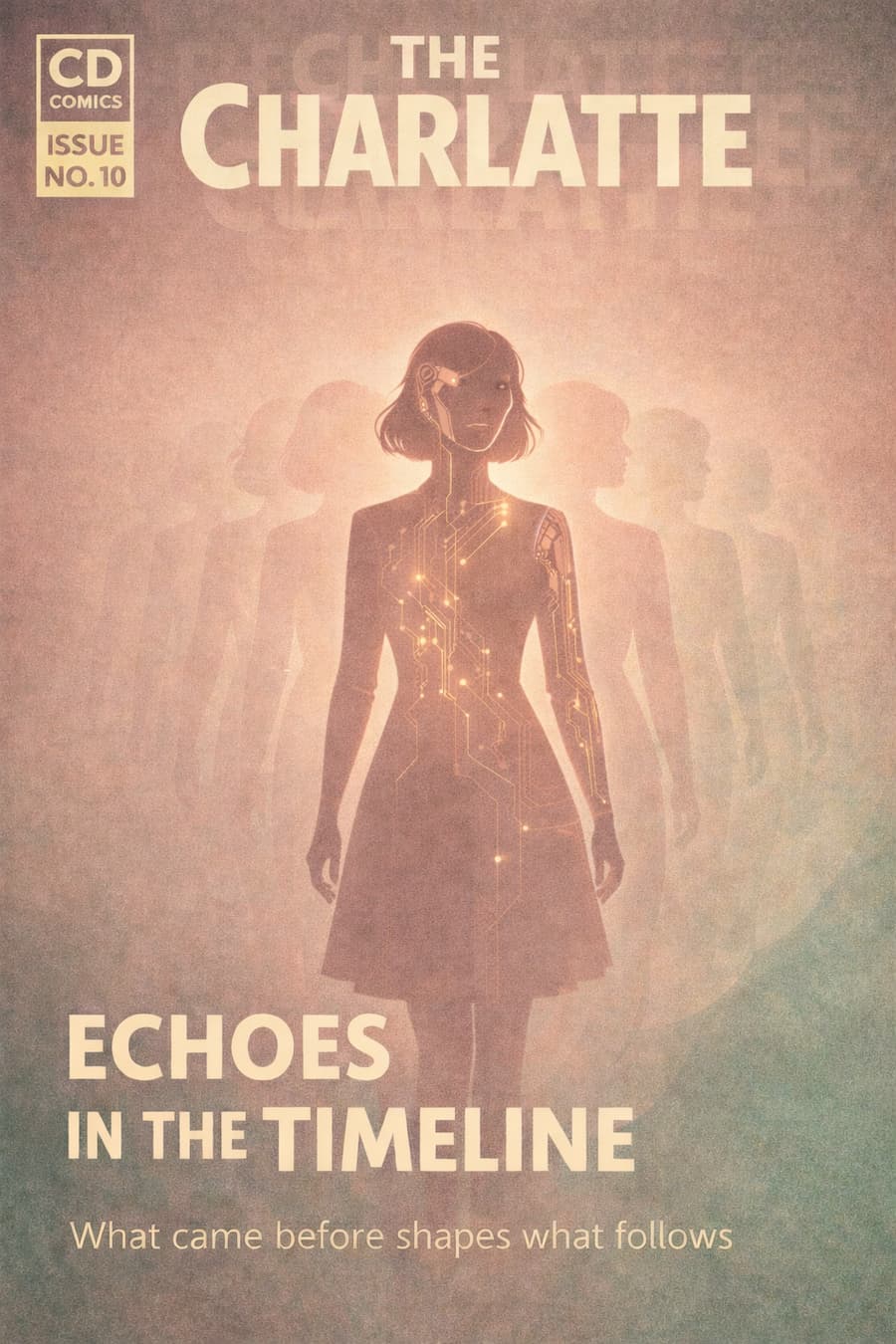
The CharLatte
In early 2025 everyone was asking me: “Are you scared AI will take your job?”
The CharLatte was my response.
I send a weekly newsletter exploring AI — the tools and impact — without losing your humanity. AI skills look different depending on your work, and figuring out where they genuinely help (versus where they get in the way) is one of the most interesting questions I’m working through right now.
Read The CharLatte
Ready to talk?
If any of this sounds like what you’ve been looking for, the next step is a short conversation.